Total Pageviews

Showing posts with label psychology. Show all posts

Saturday, December 10, 2011

To Reject or To Ignore, That is the Question

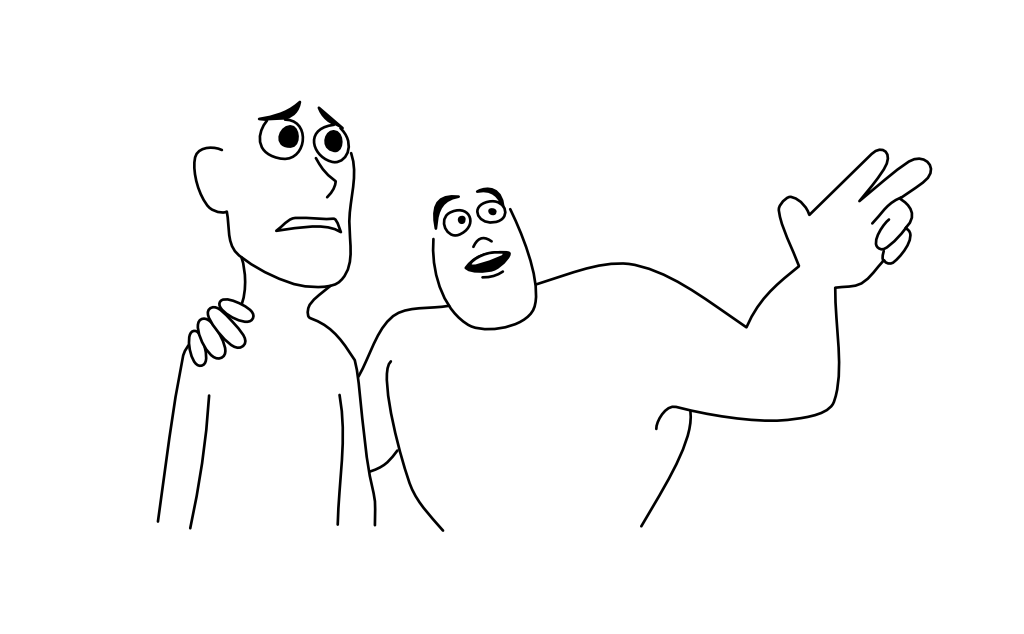
How do you deal with a person who just doesn't like you? Let's call her Cindy, for example's sake. You've gone through all the nice options: You've smiled at Cindy, bought her coffee and  even invited Cindy out with you and your cadre of compadres. Now, Cindy isn't just someone you want as a friend, she's someone you interact with everyday at work and school, and who you desperately need affirmation from (she reminds you of mom).  You played the nice card, and nice didn't work. Now, the only option you have is not-nice. So what not-nice option are you gonna take?

You could reject her. You could walk away when she talks to you, make rude comments about her and let it be known, "I don't like her". Or, you could ignore her. You could make it a point to act like she doesn't exist. When you walk by her desk, you keep looking at the cooler; when you see her on the street, you pretend like you don't; and when you're in class, you sit far away. You act like she someone you don't know. 

An article in the Journal of Personality and Social psychology,  shows that many times there's a difference in the kind of focus created in each method, whether you reject or ignore Cindy. It is likely that if you reject her, she will develop a prevention-focus. In other words, she's going to prevent feeling rejected--like by avoiding you. You don't want this to happen (though you really should) so you're left with only one option: Ignore her. 

But, ignoring her isn't just your last options; it works. According to the article in the Journal of Personality and Social Psychology,  if you ignore her, you create a much different focus. Instead of making her want to escape the pain of rejection, you are likely to create something called a promotion-focus. A promotion-focus is obvious, it will make her feel the need to socialize with you. She will focus on promoting your relationship. 

Out of the all the options--nice, reject or ignore--if nice doesn't workout, then: Ignore. Just be careful, don't take the ignoring too far or it becomes rejection. So if she tries to be nice, give her a little nice back. Keep a little mystery though. 

Wednesday, July 6, 2011

Happiness and How to Prevent Suicide: Finding Happiness While Exploring Suicide.


I've often wondered what the remedy is for  the unhappiness that seems ubiquitous to our culture. I mean, what does the average person need to be happy? What is the core of happiness for most people? Hell, what would make me happy! The answer came to me while preforming a literature search for a lab that studies ostracism. I realized  that If I want to know what makes a person happy,  I need to find out what they can't live without. Or, in other words, find out what--if taken away--would make them want to kill themselves.  

The general answer is the group. If you take away the groups, then you take away the will to life. The two major issues that create the wish to commit suicide are simply social. The first is the a feeling of belonging. If a person feels like they don't belong to a group that they value, then they are likely to have suicidal ideations.

 They're going to be miserable. In fact, a person cannot avoid feeling the pain of not belonging if they are ostracized. Recent studies have shown that regardless of how confident you are, you're going to feel pain, actual pain, at being ostracized. Our brains are wired to be hyper-sensitive to being ostracized in any way. and even something as simple as a diverted eye gaze can stimulate the pain response. 


You may say, "I don't have pain when I'm rejected". The quick answer to this is that the way this that you probably just let it go when the brain activates the pain response. You don't attend to and so you forget about it. However, some people whether through biology, bad relationships or both cannot let this go, and reflect on it well after the fact. 

Each act of ostracism or rejection makes them feel more and more like they don't belong and causes them to develop an expectancy, where they look for signs of rejection everywhere, and do so automatically. They find it everywhere because they have a  confirmation bias. So they become sensitized to everything, perceiving more and more, everyday, as a sign that they don't belong. 


The second issue that adds to the sense of not belonging to create the perfect storm of suicide a feeling of being a burden. The key feeling here is "I'm a hindrance to everyone around me" or "the group would be better off without me".  This is the best predictor of the violence of the method of suicide. Varying on this trait is the difference between the suicide attempter popping a bottle of aspirin or a bullet. The more they feel burdensome to their family, friends and others, they more likely they are to use a more permanent method of attempting suicide. This is the single best predictor of a person moving from  attempter to an actual corpse.


 Feeling like you just don't belong, or  worse, like you are a burden to those around you is tightly connected to the will to live. It's reasonable to believe that if this is so connected feeling unhappy, that turning the dial the other direction can increase the will to live and happiness. My revelations is that everyone just needs to feel valued and accepted. That's the key to happiness.

So I've made some rules for myself:

1) When in doubt, be warm and friendly--it fosters friendship and intimacy and keeps me from making someone else feel like they don't belong.

2) Look at myself and everyone else through the eyes of "What they're good at" rather than from the critical perspective. So, to use a cliche: See the good in everyone, including myself.

3) Constantly make attempts at building new relationships. This means taking chances.

4) Divert my focus from memories of rejection and feelings of failure to:

5) Constantly remind myself of the healthy relationships that I have, as well as how I can, and do, contribute to those relationships in healthy ways.


Wednesday, June 15, 2011

Understanding Consciousness: The Distinction Between Mind and Brain

In my last article, Psychiatry, Mind-body Dualism and Sensation, I went through allot of content in a very short writing. In this one, want to be a little more concise and deal less with the whole of consciousness and thought and more with the parts. 

I said that for the relationship to exist between practitioner and client to exist in psychiatry, there are only 3 options that can exist for thought: Matter causes consciousness; matter is in lockstep with consciousness and matter and consciousness are both separate from each other; or matter and consciousness are exactly the same thing from different perspectives. I argue that it is the last option that is the truth. 

The reason for this is that matter (causal aspect of world) and consciousness (perspectival aspect of world) have nothing in common. They are two fundamentally different kinds of qualities. One is 3rd person observable and the other is necessarily first person. 

I should say something about the necessity of first person in consciousness. In order to feel as a person, you must experience as if you were that person. The only way to experience something as that other person or conscious being, you must become that person. And, obviously, you are not observing them any longer; instead you are them. The causal aspects (matter and energy) are observable in some way. They effect the world around them in way that affects us in a sensory way.

Consider the brain stripped of all its sense organs and stripped of thought only allowing it consciousness. It is obvious at this point that the only thing that the brain is conscious of is itself. And, now, remember that there is the necessary distinction between consciousness and matter, a distinction of internal perspective and external perspective, first person and third person. 

So, the first 2 options---mind and body in lockstep and body causing mind---cannot work and only the last option works: mind (consciousness) and body (Material, causal world) are the same thing from different perspectives. Because consciousness and matter are so fundamentally different, one can not cause the other. Because matter can cause a change experience, there is some relationship between consciousness and matter. Because it is not a causal relationship, and because the degree of difference is one of perspective, and because consciousness changes in the form (thought) because of changes in material,  consciousness must be the material's perspective of itself---the same things from different views.  

If as I say in the last post, that possibly everything---at least certain kinds of material---have two perspectives, material and mental, and it is the material the changes the mental, then we shouldn't be looking for consciousness in the brain. We should be looking for the memory of consciousness instead. We should be looking for a place in the brain where change and stability create the memory of consciousness. When we find that point where the changes from new associations and sensation, meet stability, we have found the place where we get the memory of consciousness. 

Tuesday, June 14, 2011

Psychiatry, Mind-body Dualism and Sensation.

One of the greatest obstacles facing psychology is there isn't a single paradigm. You can't unite treatment and research into a single cohesive, exponentially building theoretical structure without a single paradigm. Too much information is lost between differing theoretical groups. This quandary stems from one major problem: There isn't an adequate distinction between mind and body.

This has been a thorn in the side of philosophy for thousands of years. It seems to have no solution. However, psychologist, psychiatrist and other mental health professionals need not struggle in the frame work and discipline of philosophy. They've worked themselves into a rut. We can apply philosophical style reasoning without burdening ourselves with a philosopher's baggage.

We can do this by stripping psychiatry down to it's core conceptual features, by narrowing our scope of inquiry to what we must assume to do valid and reliable scientific work. There is a point where even our methodological assumptions demand metaphysical assumptions. Psychiatric work demands one major assumption: the physical changes the mental.

In every case, a counselor, psychology or psychiatrist, is using the material/causal world to change the mental world. A counselor speaks to the client, and the client's ears pick up sound waves that impact chemical and neuronal brain structures; and a psychiatrist provides the obvious physical influence of chemicals in a readily tangible pill.  Though this may seem obvious, it's not insignificant.

It reveals a relationship between consciousness and matter, mind and body.  For this relationship to exist, between mind and body, there are 3 choices: Matter causes consciousness; matter is in lockstep with consciousness and matter and consciousness are both separate from each other; or matter and consciousness are exactly the same thing from different perspectives.

In order to know which of the three is the correct answer, consider what happens when we have a visual experience. When we see something, we don't see that something; instead it strikes our retinas and a cascading reaction begins. Instead we have an experience. The brain changes because of that pattern of stimulation, and it causes a patterned experience. Neurons fire, they release transmitters and the physical structures of the brain changes. That pattern of change that specific experience.

The brain's experience is of the pattern. However, consider that the consciousness qua consciousness--consciousness without pattern and simply as presence---is completely different. It is purely perspectival, receptive and necessarily first person.

Matter and Consciousness would be incapable of creating one another. They have nothing in common. However, consciousness always has shape and quality. It is either red or blue, happy or sad, square or circle---it is always something. Consciousness isn't caused matter (causal things), it is the form of consciousness that is caused by the shape of matter. So thought, the form of consciousness, has something in common with matter---namely its shape.

So the shape of matter changes the shape of consciousness. And, we are still left with the same problem. How does consciousness interact. They don't. They are two aspects of the same thing. Consciousness is matters perspective of itself. However, saying this seems to make no sense because there is allot of my body, and only a little of it is conscious. This problem can be solved by considering sleep research.

When a person shaken awake, they remember what they were dreaming about, but if they weren't, then they may consider themselves unconscious all night. The reason they think they were unconscious is because they don't remember.  Memory is inhibited in sleep states. They were feeling and thinking, but long term potentiation (memory) was suspended. Everything may be consciousness, like us during sleep, but  not everything has memory.

Memory of other states is necessary for considering one's own consciousness. You must remember consciousness in the past to consider it.

But, it's more than memory because the brain is the same shape. Its shape should be conscious of itself. However, what its not remembering is its change. Change is required for cognition and memory. There is a constant change of brain states. We're always in one state, that one moment of consciousness, but that one moment contains traces of the past. It has sensory echoes. Like an after image in the eye, we always have the past connected with our present, one vivid experience overlaying a weaker impression of the last one---but still leaving trace recognition of it. Our past experience is in our present experience.

To further this point, consider habituation. If you look at the same image for long enough, you no longer see it. Your nerves become habituated and no longer "see" that stimuli. What cognition provides that is different from other bits of matter is that it is in the right ratio of change and stability. Neurons, physical units, remain mostly the same---in the same position or shape---but have a electrical charge change it slightly. It retains a shape, only slightly changing. While, at the same time, it is rapidly changing.

This doesn't just happen on the micro aspect of the brain---where neurons change and do not change---it occurs on the macro level. Different parts of the brain change at different rates. Many parts of the brain change far faster  than others. The faster changing parts of the brain, like the hippocampus, access the slower changing parts of the brain where it indexes information.

There is a constant flux of change and stability. There is contrast. It is in this contrast between memory, fading experience and brighter fresh experience that is causes us to remember our own consciousness. Consciousness is matter's perspective of itself. Memory and change allow us to remember our previous consciousness through a delicate balance of change and stability.

It is in reconciling this change and stability with modern theory, that we will discover how to unite our psychiatric theories.  This is a start. In order to build a cohesive paradigm, you must start with a firm foundation. Psychiatric theories must build from the smallest units, piece by piece, so that the rest of a staggering large network of theoretical information can find unity. The beginning piece is reconciling Mind and Matter. Matter and Mind do not interact. They are two of the smallest aspects of our universe that are only conceptually distinct. All matter is probably "conscious," but it doesn't have the right ratio of change to stability that allows it to recognize its own consciousness. We do. It is in our highly associative, interconnected brains that this ratio is found in its perfection. Change and stability are united in some golden ratio.

Saturday, June 11, 2011

The News, Ethics and Politics: Our Futures And Their Power

Eliminate politics. It is a bad venture. It has been for thousands of years, and it will be for thousands of years to come---if we don't cure it like the disease that it is. Lets face it even the brightest of us don't understand everything, and no one truly knows even a good portion of economics, social science and world diplomacy. Each of those requires extensive, almost infinite, information about equations, human nature in groups and as individuals and about thousands of cultures. There is literally no way to know it. However, in our modern political scene, we pretend like we do. We act certain. We feel certain. We are deceiving ourselves.

Since when have you opened up an advanced text book to realize you know everything in it---even when you've been in that field for years? Any professional knows that there is literally more information in an given, single, professional field than any one hundred trained professional's can assimilate, let alone one person.  And, there our thousands of professional fields and specialities that are required to run the government for even a day. And each of those have hundreds or thousands of people diving up the understanding and responsibility of those areas. 

Yet, when we vote, we think we can decide whether or not someone had done the right or wrong thing in there field. We pretend that we know what philosophy is best for running our  nation's finances, whether it is better to lighten taxes or increase them, whether to drill or not to drill, whether to attack or not to attack. We are wrong. These are not simple problems that can be solved with a civilian's mind, or even a brilliant professional's mind. Each of those problem requires infinitely complex mathematical,  behavioral, economic and cultural calculations that requires thousands of brilliant minds to understand and act upon.

However, this is what politics tells us: "You understand it all, and you know you can trust me, so vote me because you know I am right". Meanwhile, they're spoon feeding your only information. And, you take it up eagerly because believing is far better than feeling lost in the chaos of information you can't understand. Believing that Joe the Plumber or Sarah Palin can run a nation makes you feel more equipped to handle the world.

In reality, you are busy surviving, feeding your children and working your job, and you are just one person. You can't understand. the best that you can hope for is that you play a significant piece in the puzzle. The best way to play a piece in the puzzle is to vote people in who are qualified to make those decisions. In this world of constant psychological manipulation that is an impossible choice. There is no way to make the right decision. 

And, that is how we need to exercise our power in this democracy: we need to find a way so when we make a decision we can have a real, trustworthy reason to believe that it is correct, and not just deceptive certainty. 

We need to break it down. What do we want for our nation? We want to live healthy, happy and free. We want our nation's power to protect and promote these. We want crush corruption, and optimize our government so that it serves our desire for a health and happiness in the long and short term. We can do that by effective watch-dogs, and the best candidates. 

We must fix our watch-dog and find a way to choose our candidates that eliminates political manipulation, whether wielded through a news agency or a  politician. The way to do this is to make the News a different kind of profession, held to the same standards as a doctor or lawyer. A profession that is not for entertainment value, but that genuinely seeks to uncover corruption and bring truth to the public. News agencies need to become a new legal category, where the size and influence of the agency is limited by strict rules, and where the news agencies are held accountable by other news agencies and the public. Every story that is meant to report news on politics or world happenings should have reliable and valid resources,  recorded and verifiable.  If they don't there should be serious consequences, consequences that are independent of the government, but no less binding.

The other side of this is politicians themselves can manipulate, and subtle differences between the candidates can warp the vote in wrong way. For instance, you can predict elections based on how tall the candidate is. This preference for taller people could cause us to choose the wrong person. And there are many more ways that are both intentional or not intentional that we can be influenced to vote in the wrong direction. 

In order to snip our own self-defeating mental heuristics out of the process, we need to limit the kind of information that we receive. We should do this by law. The law must say that we never see our candidates.  The only criteria that can be known---and posted and easily accessible to the public must be: IQ, Education, Grades, Languages spoken, Experience, Financials and Other criteria set by a committees of the best professionals who deem these to be important in decision making and background experience.  Political affiliations of the candidates should never be mentioned.  Specially designed tests for candidates need to be taken and posted, as well, that gage leadership skills, charisma, and cultural and economic understanding.


The only way to fix a broken system is to redesign it. Our system is broken because we don't have the kind of understanding and control we think we do. We aren't actually making choices---we're being unconsciously told what to do. We're leashed. We're leashed to other's information, other's opinions and other's persuasive charisma. Beef up the watch-dogs and eliminate the political scene by eliminating the manipulation. Eliminate politics. 


Tuesday, May 10, 2011

Wolves In The Trees: A Moral Myth

Morality is a problem. The concept of morality now creates greater harm than good. Whereas it was once a useful transparent drive---something we are not aware of---now it has become harmfully deceptive. It masquerades as something that is real aside from our instincts and gives the appearance of fact that is not there. It forcibly asserts its own truth and commands its realness apart from the person---when in fact it is nothing more than the person's constitution moving the person and that person's feelings.

Morality requires free-will. If you don't require free-will, then what you call morality is simply a mistake of action no different from turning on the wrong road. For instance, If I kill my neighbor because he was standing in the road and I didn't see him, I haven't done anything immoral. However, if I walk into his front door and kill him by shooting him after planning the assault for days, most people would say I have done something immoral.

In one case I had no intention to kill; in the other I intended to kill. So the immoral act seems to be wrapped up in intention. But, a person who kills another cannot choose their reasons for killing---they simply acted on them. The intention is the beginning of an action. They also cannot will an intention strong enough to stop if they do not have that intention. It is a logical impossibility and a cognitive impossibility that a person wills or intends what they would will or intend. In the case of intending an intention, they would have to intend their first intention.

If I have had no choice in any meaningful sense, because my reasons have been determined, then I have only acted by necessity. If I have acted by necessity, then I have not intended an immoral action; I have simply acted while being aware of an aspect of my own internal causation [This also has drastic consequences for our conceptions of will and action]. If this is the case, then referencing intention is superfluous. The action of killing with or without intent is meaningless in a moral sense because it is no different from an accident. "Moral" simply doesn't exist as anything.

We feel moral or immoral. Things strike us as right or wrong. It seems to be a built in category to people. We see this, it has certain qualities, it gets put into this natural, empty category with a valence of "morality (good, bad)" attached. It is a feeling with a compulsion attached. However, it doesn't exist as a real existant thing qua morality.

There is a problem though. Intention doesn't seem to be a meaningless aspect of what we call "morality" or life. There is something important about it. So why would we have this mechanism---whether built-in, learned or both---that pushes such import on a "moral" agent and on agents intent? Why is there the difference between an intentional action and an unintentional action?

The answer is simple. An intentional action reveals intent which, in turn, reveals the reasons for the action: the stable disposition of the actor. An accident reveals little; an intentional action reveals a complex, thinking entity which is actively seeking harm. It is greater likelihood that Bob, a serial killer, is going to actively seek out a gun and shoot me than it is that Frank, a meek accountant friend of mine, is going to accidentally shoot me because he happend to find a gun in his desk (Bobs prank).

When I go hiking and camping, I'm not afraid of a deer accidentally running me over and breaking my bones. Its unlikely. However, I am concerned about wolves. They are actively seeking a prey. Their internal disposition is to hunt, kill and eat---and eating me is a distinct possibility. Now, lets say that I am a primal man, or a hippy (who hunts), with a wife, children and chickens. If I see a wolf, I am likely to kill it. It represents an active source of danger to my wife (she's petite and weak.The anti feminist ideal), my children and has already killed several of my chickens. My first response is to kill that wolf because I know its dispositions towards violence. Its intent is to kill as a stable disposition. Not only that, but I will probably actively seek to kill wolves, especially the ones that cross my path, because this reduces the likelihood that I will loose a kid, my hot lady or a meal.
We do the same same kind of mental calculations when we see someone who intentionally has done something wrong, like murder. He is fundamentally dangerous, at his core. He is wrong because he is unsafe to let be loose around us and our children.

We condemn any person, or it is adaptive to do so, that reveals such a dangerous character because one we can stop their characters progression towards danger through disapproval or we can end their threat by getting rid of that person.
In addition, you might say that we call lots of things immoral that aren't directly dangerous, like certain sexual improprieties. How does this fit into the development of need for an idea of objectively moral. However, these people still represent dangers for two reasons: they are not social constrained, and they are not predictable. Immorality, as conceived by many cultures, typically revolves around acts which if left unconstrained would result in danger. And they reveal a lack of inhibition. If a person can't keep it in his pants, like he has sex with any one he meets who is willing, he shows that he is not able to regulate his sexual desires---which could lead to incest, rape, hurt emotions (like jealousy) or a break down of certain social constructions, like marriage (which in times past was necessary for raising children and giving the male reproductive rights).

When a person violates social constructions, they reveal this lack of inhibition for one, and they reveal that they might not care about the constraints that the people find safety, reward and significance in. We consider them morally wrong because they break down our ability to make stable social structures. For instance, we may call a liar immoral because he always intends (acts out of his personality) to lie and that lying will be consistant. He is completely unpredictable. He may not directly harm you, but he can indirectly harm you by giving you bad information, violating a contract or slandering you. He is a threat to a stable culture.

This has many implications for justice. We are sentencing prisoners to death or imprisonment because some of us believe they deserve it and this is the natural reciprocity of justice. However, if we saw them as flawed, we might seek to fix the flaw rather than cage or eliminate it. Our methods would be different. If a prisoner is metaphysically immoral in a sense we cannot ever even have access to, because it is part of free will for he is evil, then we will seek to completely destroy him from our midst. If he is not constituted right for the context of the culture and the autonomy of other people, but the reasons for this failure are things we can address, we would look for ways to fix that person and head off others who would develop like him.

Believing in an objective morality was once highly beneficial and adaptive; however, now it may not be. The above example shows that a clear elucidation of what we are talking about when we talk morals can change the ways we look at a situation. If I keep looking wolves in the same old way, I might wipe them out and destroy the food-chain destroy my sustenance; If I see one person as moral or immoral objectively, then I might kill off someone that reveals a solution to the overal problem; or I might accidentally confuse something as wrong and dangerous that is not and destroy it. Many wars have been fought on the grounds of objective morality. This side believes that that side is wrong, vile, objectively immoral and the other side feels the same about that side. They cannot fix the issue, to have peace, because they cannot see the other side as being something that they can integrate: for that side is fundamentally bad. If something is fundamentally bad, in a way that is out there somewhere in free-will-land, and hence not fixable, then the only way to solve the issue is to dominate or destroy the other side.

If we see problems as reconcilable within the objective modifiable world, then we will, given our general human constitution, seek fix that problem. For we wouldn't see a person or nation as fundamentally bad, but, instead, as a problem with reasons that can be fixed. To see our world outside of the moral instinct, allows us to see it in the larger context and solve problems that are problems and ignore what are only apparent problems. We'll seek to understand wolves as wolves and see their greater part of the ecosystem or as our potential and useful pets. And, if it turns out, we simply cannot survive with certain wolves, like serial killers, we can always destroy that threat---but, we need to make sure we are not creating a bigger one.

The problem of placing intrinsic qualities, like morally good or morally bad, is that they are not fixable except by elimination---which could create greater atrocities to human flourishing---because you simply cannot chose to compromise with evil. It is intrinsically bad, completely un-choice worthy. However, if we bring moral down to the level of pragmatic in the context of human empathy, we will see problems that have far more solutions than an either/or choice. Morality presents us with false dichotomies. We need more than dichotomous thinking in a complex society, where we have evolved in or structure and even biology, beyond the day to day living of a simple forager or pre-modern. We simply can't deal with macro problems with micro concepts.